Death and Life of an Entertainer : In-process archives
Death and Life of an Entertainer : In-process archives
A space where I collect pieces of my research to share with you.
Dec 18, 2025, Reflection entry number 2
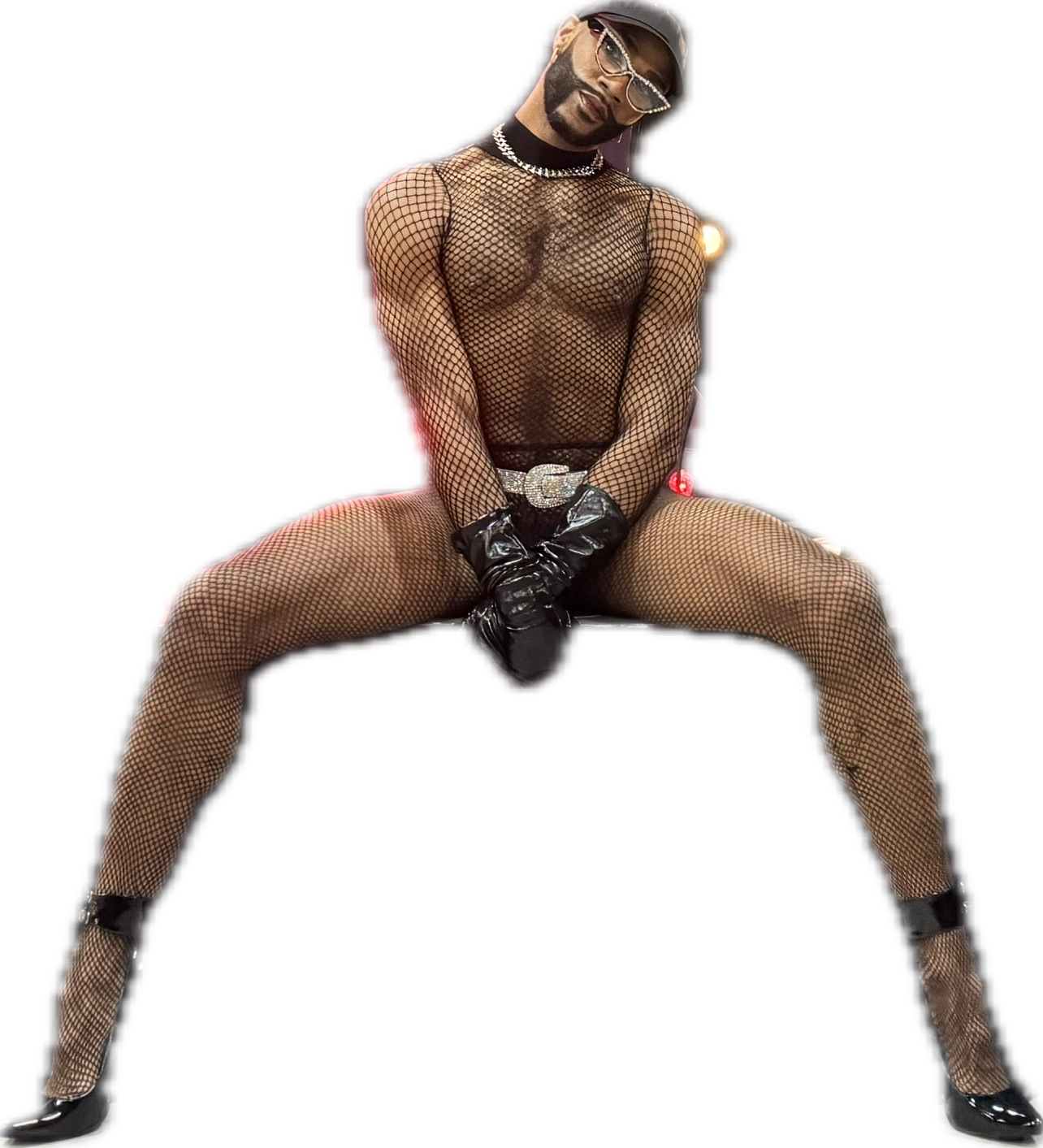
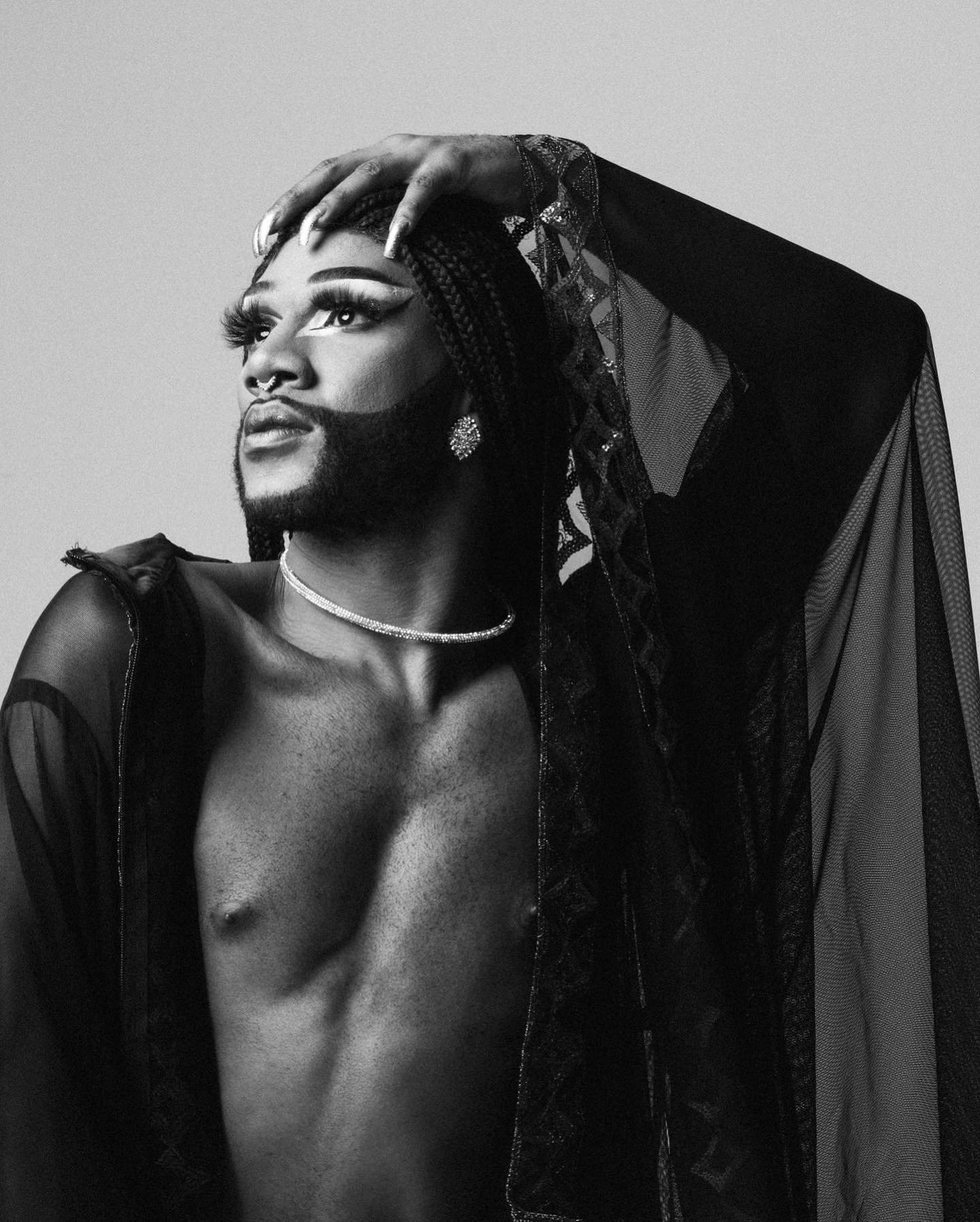
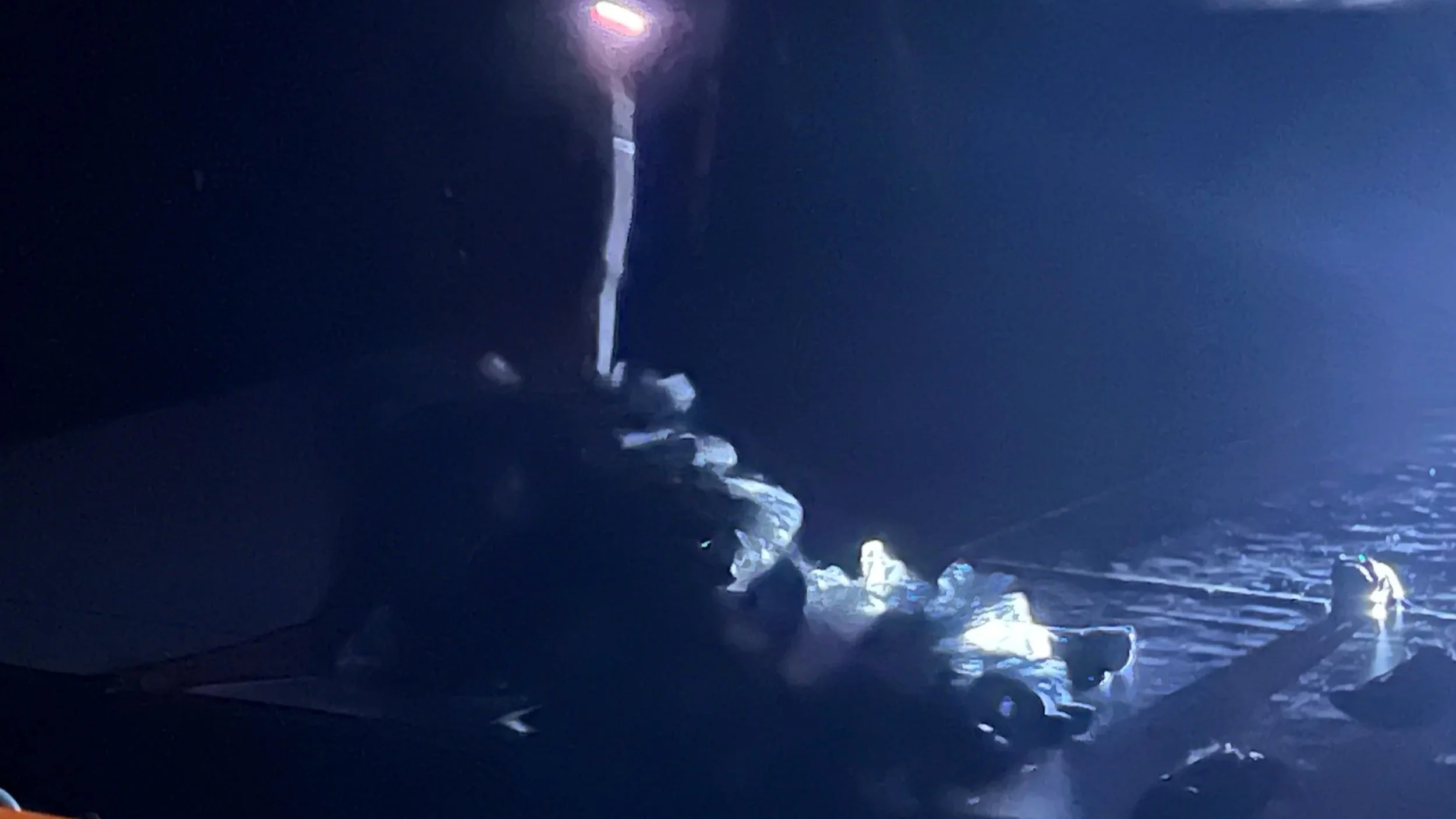
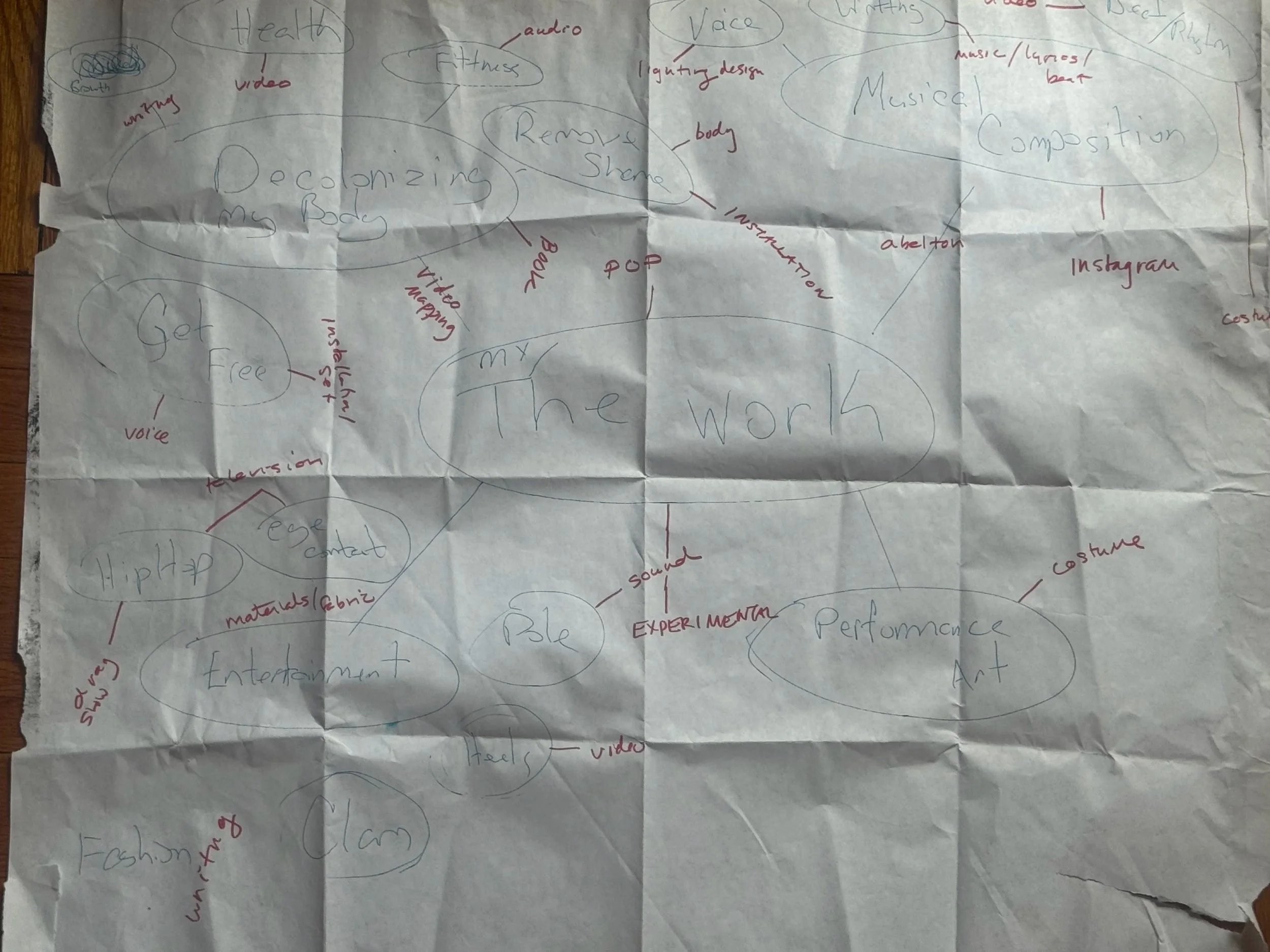
This semester concluded with the first public showing of my developing work, Death and Life of an Entertainer, presented in my World-Making class. Experiencing the piece live—both in my body and later through its physical archive of recordings, sound, and documentation—has reshaped my understanding of the work and deepened my awareness of its potential. The performance revealed a new physical, emotional, and energetic threshold for me. I felt myself confronting a different way of existing in space with this material, inviting a more vulnerable, present, and embodied encounter between myself, the work, and the audience.
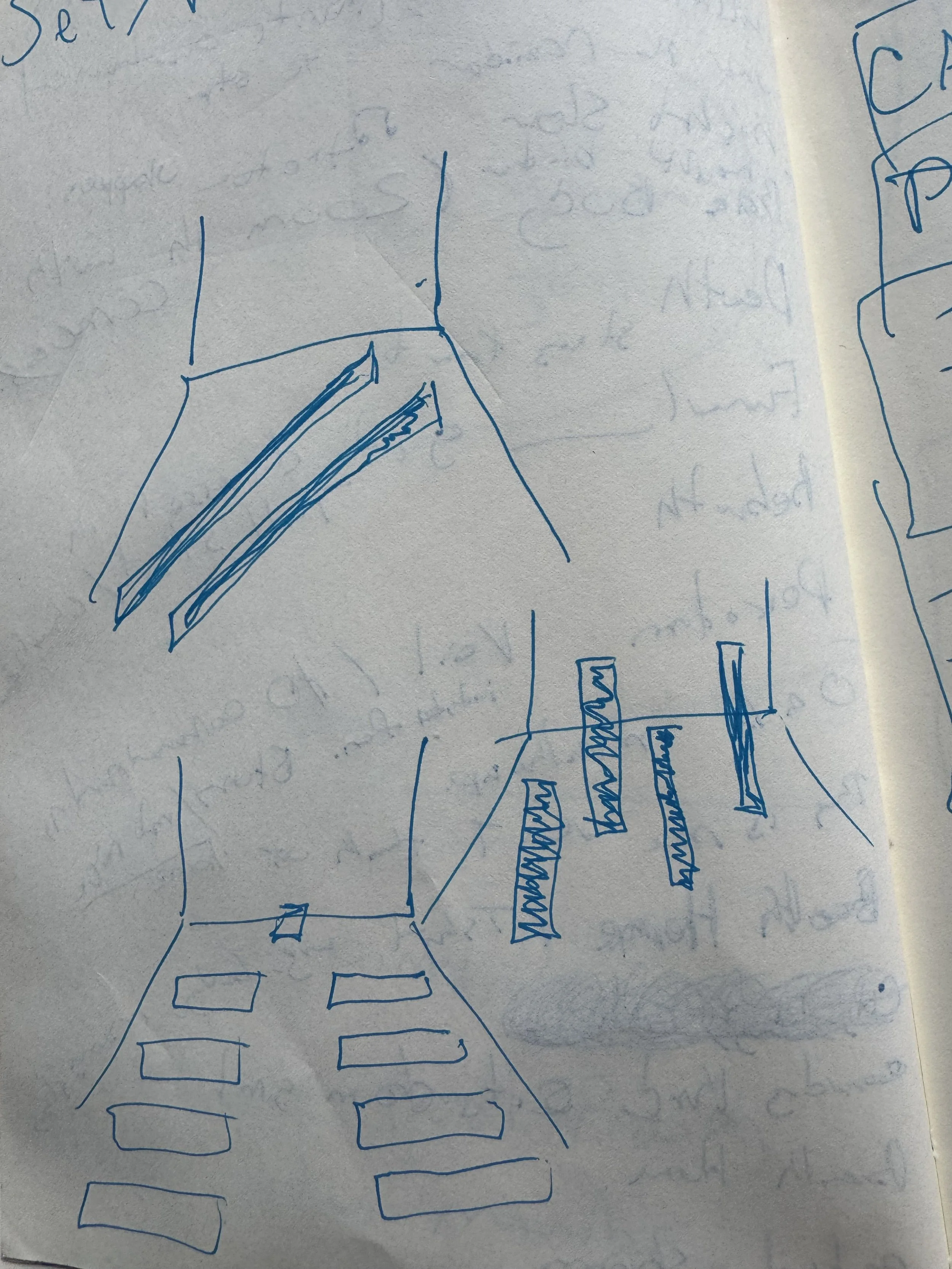
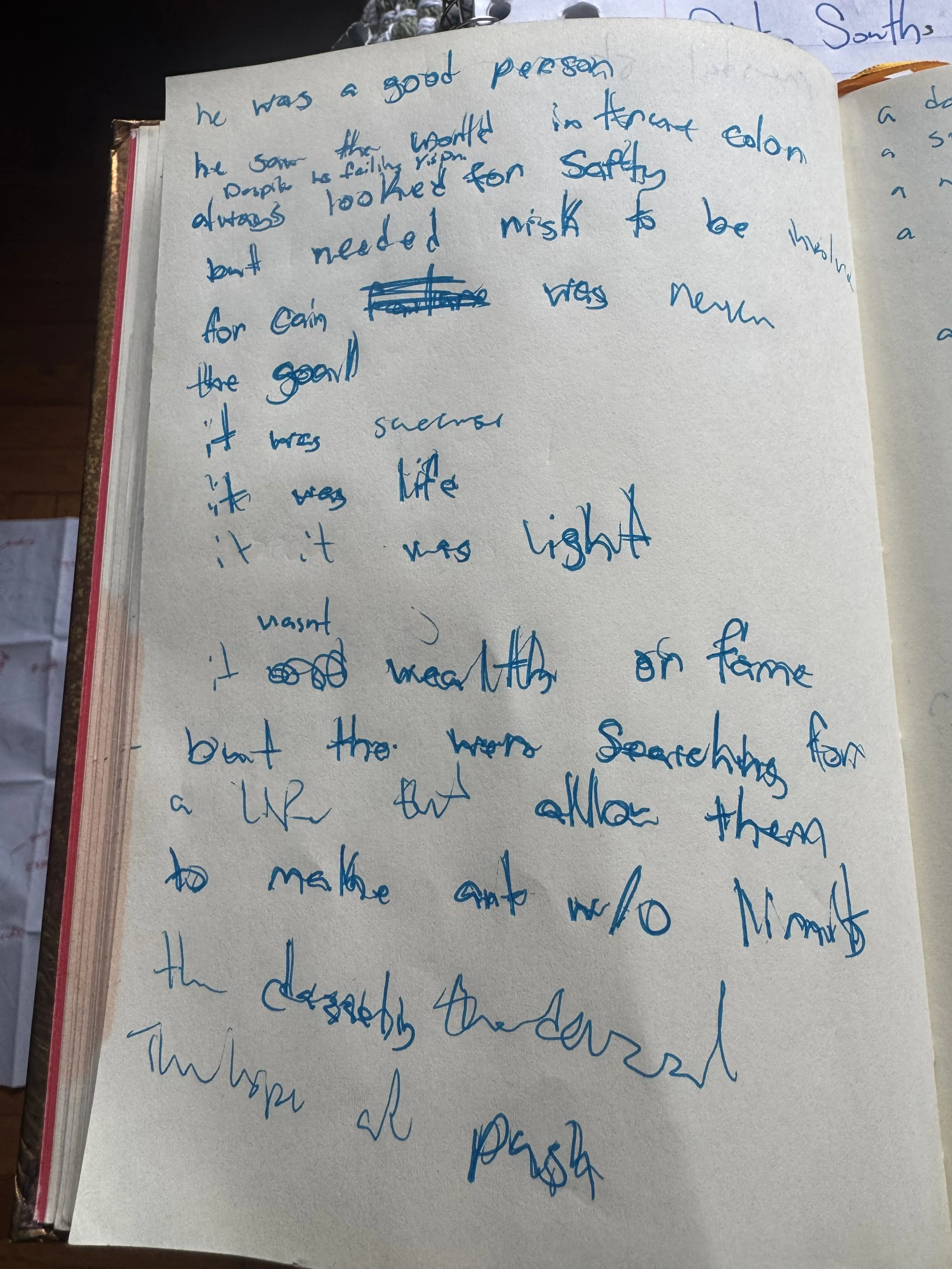
The showing began in a dimly lit space, overhead light casting selectively from above and the right, grounding the atmosphere in shadow, mystery, and anticipation. The opening section was accompanied by a live recording of my song Night Show, a love letter to New York City’s nightlife and to the communities who sustain it: club workers, bartenders, go-go performers, strippers, sex workers, dreamers, and those who inhabit the world’s in-between hours. Speaking the text aloud, I felt I was not only invoking a poem, but calling forth a collective lineage of labor, beauty, resilience, risk, and visibility. This text situates performance as survival, as economy, as intimacy, and as aspiration.
The space felt like a cipher—alive, responsive, improvisational—while also evoking the quiet stillness of a musician’s corner. I played with the tension between stillness and movement, voice and breath, restraint and revelation, as I worked to develop my growing practice of rapping and moving simultaneously. This layering forced me to negotiate stamina, timing, urgency, and control in real time, revealing how breath, rhythm, choreography, and vulnerability collide in the performing body.
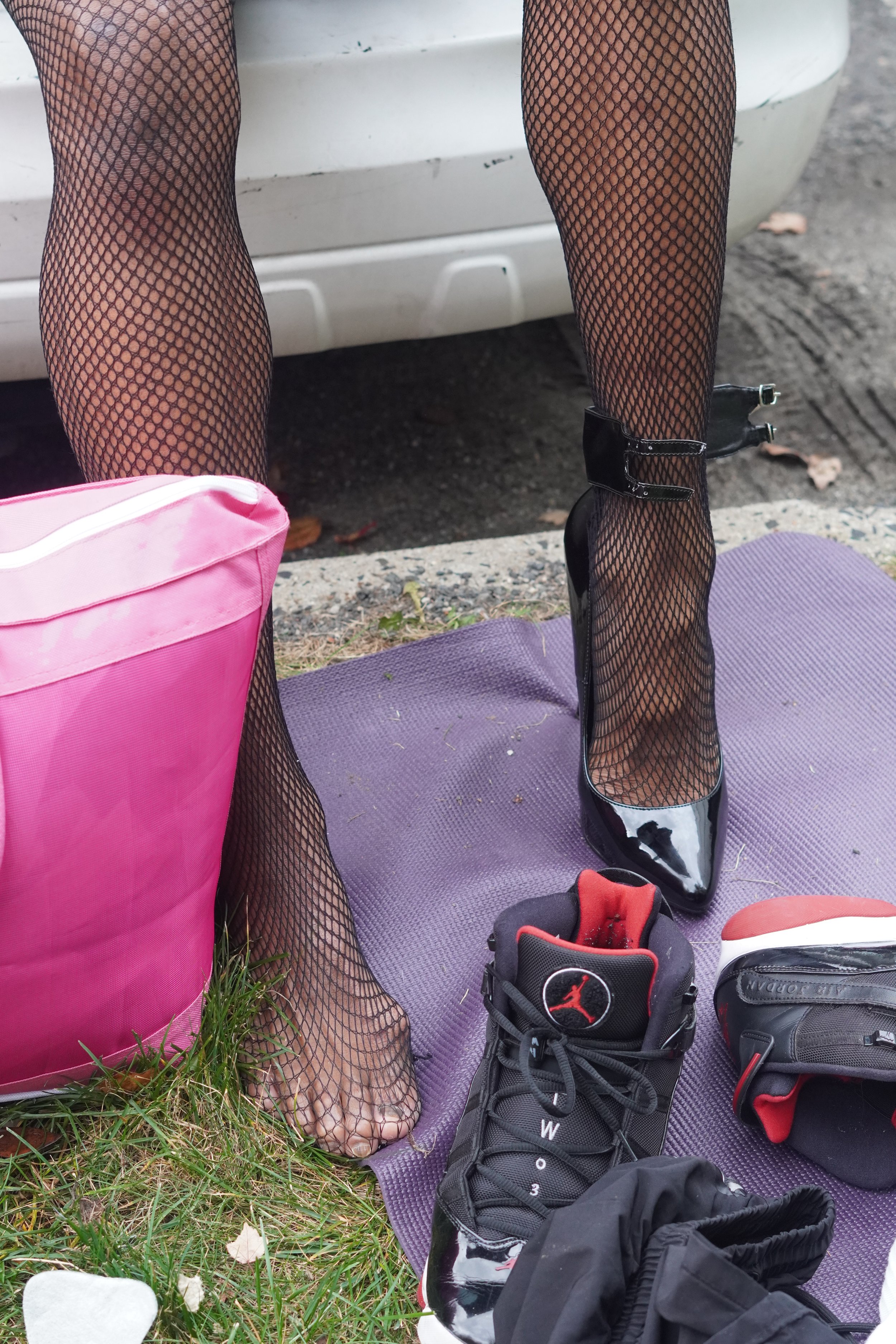
As the work unfolded, I progressively shed layers—physically and metaphorically—revealing more of myself. The piece functions as both a personal offering and a broader meditation on entertainment, performance culture, Black and Brown artistry, and the many roles we embody in order to survive systems that often consume us. It lives at the intersection of masculinity and femininity, sacred and profane, spectacle and ritual. I found myself interrogating how the body can shift in milliseconds from feminine to masculine, submissive to dominant, angelic to erotic, human to archetype—transforming simply through posture, gesture, silhouette, and intention.
Throughout the rehearsal and showing process, I engaged research around posture, gait, walk, stance, and iconic physicality. I explored bodies across time—showgirls, athletes, scholars, protestors, celebrities—and considered how performance frames danger, desire, and spiritual transformation in ways that feel both protected and exposed. Under low light, the body became clay: mutable, sculptural, alive. Light, shadow, object, and flesh engaged in constant dialogue. Every non-human object—a stool, sneakers, a boa, fabric, stage floor—became animated through my interaction with it, resonating with concepts from the Posthuman Glossary, where the non-human is not background but collaborator, witness, and amplifier.
This first iteration of the work, approximately sixteen minutes in length, felt like the beginning of a much larger world. I now envision the piece expanding—with more collaborators, greater musical integration, richer dramaturgy, and deeper choreographic and theatrical construction. Ultimately, Death and Life of an Entertainer seeks to honor the legacy of Black and Brown entertainers—especially femmes—whose labor, brilliance, vulnerability, endurance, and audacity have paved the way for artists like me to exist fully and unapologetically.
This process affirmed the work’s emotional, physical, and cultural stakes. It also reaffirmed my commitment to interrogating entertainment not simply as performance, but as archive, spirituality, erotic knowledge, community ritual, labor, and survival. Moving forward, I am excited to expand this world, deepen its inquiry, and continue honoring those who built the stages I now stand on.
Performance and Theatrical References and Influences (APA Style)
Revelations
Ailey, A. (Choreographer). (1960). Revelations [Dance work]. Alvin Ailey American Dance Theater.
Doechii: Live from the Swamp Tour
Doechii. (Performer). (2023–2024). Live from the Swamp Tour [Live concert tour].
Beyoncé – Super Bowl 50 Halftime Show (“Formation”)
Knowles-Carter, B. (Performer). (2016). Super Bowl 50 halftime show [Live televised performance]. NFL.
Death Becomes Her
Zemeckis, R. (Director). (1992). Death becomes her [Film]. Universal Pictures.
(Frequently referenced for theatrical camp, spectacle, and femme grotesque aesthetics)
Bronx Gothic
Okpokwasili, O. (Performer & creator). (2014). Bronx Gothic [Performance work]. New York Live Arts.
NightGowns
Velour, S. (Creator & host). (2015–present). NightGowns [Drag revue / live performance series].
New Information
Coleman, C. (Performer & creator). (n.d.). New Information [Live performance]. The Shed, New York.
Doja Cat – VIE Live
Doja Cat. (Performer). (n.d.). VIE Live [Live concert performance].
(If this refers to a specific tour or televised performance, the citation can be tighten
PYT: Life and Death of a Showgirl
an original A tv series I am currently writting a pilot
Below is the breakdown of the story that was also inspired by my research
I’m writing a book about a 25-year-old girl from Baton Rouge who moves to New York City to chase her dream of making it on Broadway. After months of auditions, and just days before she’s ready to pack it up and return home, she takes a last-minute gig at an amateur night in a strip club. That night, she makes $5,000. The very next morning, she books the Broadway production of Chicago as a lead dancer.
Her life unfolds like a double exposure—two stories running parallel. She’s suddenly making more money than she ever imagined. Broadway shows end around 11:30 p.m., and her club shifts in Jersey run from 1:00 a.m. to 5:00 a.m. By 6:00 she’s home, washed, and in bed by 7:45. Her weeks are relentless: five nights at the club, six days on Broadway, eight shows a week. On a good day, she squeezes in seven hours of sleep and six hours of daylight to move through the world. Within a year, she has $150,000 saved and an endless flow of cash.
The story centers on how she navigates being different in every setting. The only Black woman in both spaces—the strip club and her Broadway cast—she keeps her two lives strictly separate. She manages it well: outgoing, social, beloved in both circles, but no one knows about her double life.
Pty also comes from a deeply religious family. Her mother, a devoted Christian, is married to a pastor. Her grandparents, on the other hand, are spiritualists, steeped in different traditions. The two sides of the family barely speak, their values and views on life split wide apart. For Pty, their conflict is a shadow she carries.
As her money grows, she begins using it to rebuild what was lost. She helps her mother reopen the women’s and girls’ dance studio that was destroyed during Hurricane Katrina. She also begins pouring money into music—her own music. Eclectic, soulful, punk-laced R&B. She’s not a big shopper, so most of her money goes into producing, marketing, and promoting her sound. At first, she’s anonymous, dropping tracks on SoundCloud. They catch fire. Soon her music spreads to iTunes, Spotify, and beyond.
This lane makes sense for her—she already has a second undergraduate degree in pop music production and engineering. Her two worlds start to cross when she performs her own songs at the club, creating a hybrid of pop, punk, and R&B stripper anthems that become the heartbeat of the space. Still, no one knows it’s her.
Until one night.
Leaving the stage door after Chicago, she runs into a familiar face: one of her strip-club patrons, a man who has always tipped her generously. He recognizes her instantly. He rushes to compliment her Broadway performance before realizing exactly who she is. Terrified, she begs him to keep her secret. He agrees, offering her dinner instead. Moments later, a Bentley pulls up to the curb.
“I thought you drove an Explorer,” she says.
He laughs. “That’s just my Jersey car. Where I stay on the weekends—away from my family.”
She presses him about the family he’s hiding, but he reminds her: a secret for a secret. They seal it with a pinky promise before she slips into the car. Dinner turns into sunrise. They part as friends, exchange numbers, and stay connected throughout her story.
Meanwhile, she relocates from Brooklyn into the city—closer to the theater, closer to the PATH train, closer to Jersey. Her mother continues to disapprove of her role in Chicago, convinced the show is filled with murder, sex, and sin. “Why would you want to be in something like that?” her mother asks. Pty answers, Because it’s Broadway, Mama.
Her grandmother, though, grows suspicious. She dreams of Pty performing alone on stage to a screaming crowd, visions filled with piles of cash. “You’re not the lead, so why would I dream that?” her grandmother asks. Pty deflects, insisting she’s just paying off student loans—though she never had any, thanks to scholarships. Her grandparents don’t fully believe her, but they sense the ancestors are pleased and encourage her to keep going.
And always, there is Doberman—her cat. They never meow, she never speaks aloud, yet they communicate constantly. Telepathic, clear, grounding. Doberman becomes a guide, a silent compass waiting faithfully at the window each night as if they’ve been watching her walk up the block.
Pty is a Virgo, born September 4, sharp-minded and steady. Her lifestyle is chaotic, her sleep often rushed and broken, but she treats her body with reverence—recovery, training, discipline. Even as the pace accelerates, she takes care of herself. She knows the balance between collapse and control is razor-thin.
This is the life and death of a showgirl. A girl who holds two stages at once. A girl who lives in two worlds at once. A girl who refuses to be just one thing, even as the cost of multiplicity closes in.
Cinematic References and Influences
A Streetcar Named Desire
Kazan, E. (Director). (1951). A Streetcar Named Desire [Film]. Warner Bros.
(Original play by Tennessee Williams, 1947)
Showgirls
Verhoeven, P. (Director). (1995). Showgirls [Film]. United Artists.
Eddie Murphy: Delirious (red leather suit)
Murphy, E. (Performer). (1983). Eddie Murphy: Delirious [Comedy special]. HBO.
Dreamgirls
Condon, B. (Director). (2006). Dreamgirls [Film]. Paramount Pictures.
(Based on the Broadway musical by Tom Eyen & Henry Krieger, 1981)
P-Valley
Hall, K. (Creator). (2020–present). P-Valley [TV series]. Starz.
Genius: Aretha
Hudlin, B. (Director). (2021). Genius: Aretha [TV miniseries]. National Geographic.
Being Eddie Murphy
Smith, A. (Director). (2023). Being Eddie Murphy [Documentary film]. Apple TV+.
Sweet Bird of Youth
Williams, T. (1959). Sweet Bird of Youth [Play]. New Directions.
The Wiz
Lumet, S. (Director). (1978). The Wiz [Film]. Universal Pictures & Motown Productions.
The Last Showgirl
Coppola, G. (Director). (2024). The Last Showgirl [Film]. Utopia & Digital Ignition Entertainment.
B.A.P.S.
Reiner, R. (Director). (1997). B.A.P.S. [Film]. New Line Cinema.
white Christmas
Written References and Influences
Roach, S.
Roach, S. (2021). Black sex in the quiet: On interiority. The Black Scholar, 51(3), 7–17.
https://doi.org/10.1080/00064246.2021.1942322
Nash, J. C.
Nash, J. C. (2014). The black body in ecstasy: Reading race, reading pornography. Duke University Press.
Duggan, L., & Hunter, N. D.
Duggan, L., & Hunter, N. D. (2006). Sex wars: Sexual dissent and political culture. Routledge.
(Original work published 1995)
Walker, A.
Walker, A. (1974). In search of our mothers’ gardens. Ms. Magazine.
Reprinted in Walker, A. (1983). In search of our mothers’ gardens: Womanist prose. Harcourt Brace Jovanovich.
Christian, B.
Christian, B. (1987). The race for theory. Cultural Critique, 6, 51–63.
https://doi.org/10.2307/1354247
Nash, J. C.
Nash, J. C. (2018). Writing black beauty. Women & Performance: A Journal of Feminist Theory, 28(1), 1–15.
https://doi.org/10.1080/0740770X.2018.1429004
Baldwin, J.
Baldwin, J. (1976). The devil finds work. Dial Press.